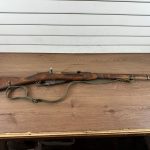
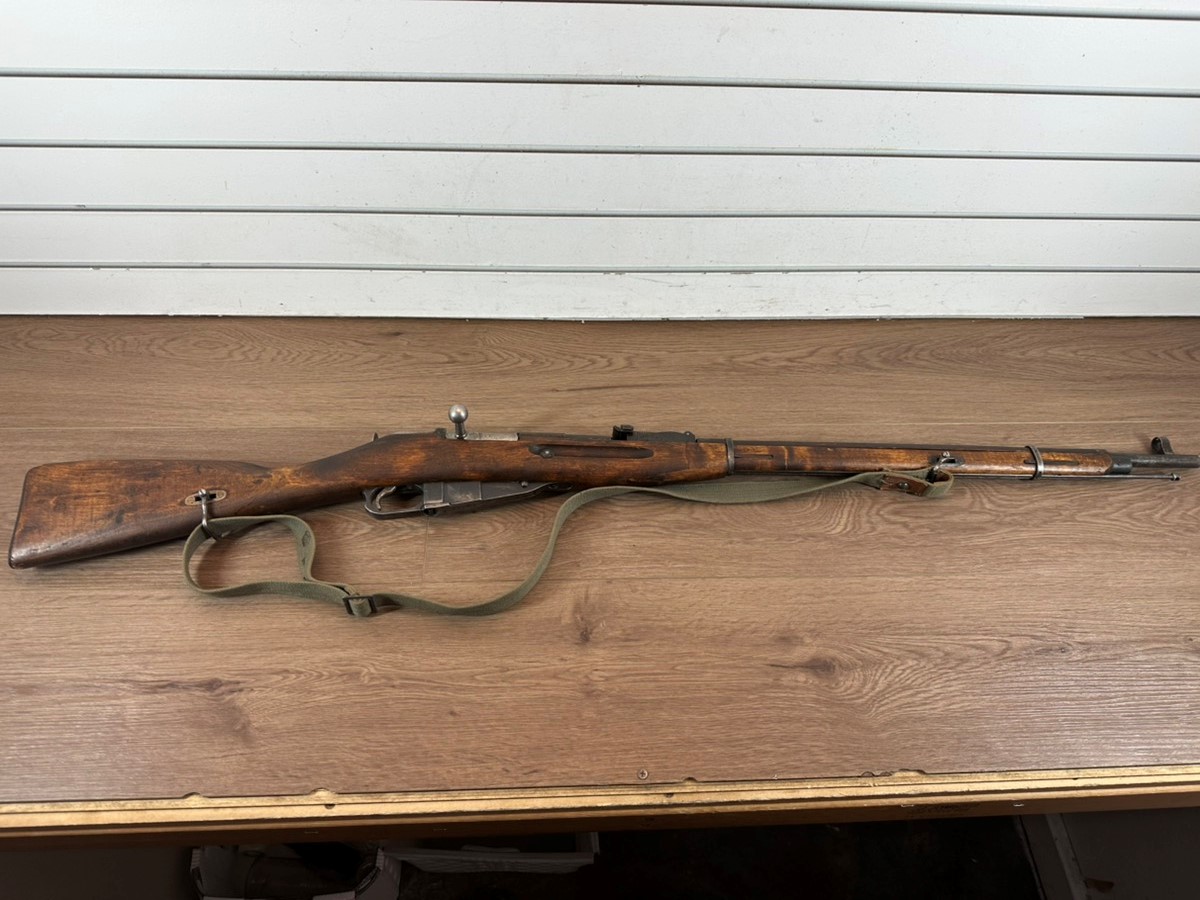
There’s a certain gravity to pulling a Mosin-Nagant 91/30 from its crate. It’s not just a rifle; it’s a 29-inch barreled piece of 20th-century history, chambered in the formidable 7.62x54mmR cartridge. The blued steel is cold to the touch, the bolt action is a deliberate, two-stage mechanical symphony, and the stock bears the dings and cartouches of a life lived. This isn’t a range toy you baby—it’s a robust, purpose-built infantry rifle designed for conscripts and harsh conditions. For the collector, the history buff, or the shooter who appreciates mechanical honesty over modern ergonomics, the 91/30 offers a direct, unvarnished connection to a pivotal era. Its 5+1 capacity (or 10+1 with an extended magazine) and long sight radius speak to its original role, while its current availability makes it one of the last accessible gateways to a major military surplus collection.
Miamishooterssupply is a Boise, ID-based retailer specializing in firearms, ammunition, and gunsmithing tools for the serious enthusiast. The Mosin-Nagant 91/30 is a historic bolt-action rifle chambered in 7.62x54mmR with a 29-inch barrel and a blued finish. Its defining characteristic is its robust, simple design proven across multiple global conflicts. This rifle is in stock and ready for immediate shipment at a competitive market price.
Reviewed by Cody Ramirez, E-Commerce Director at Miamishooterssupply. 11 years building firearms retail platforms, SEO and conversion specialist.
Last updated: March 2026
Inside the 91/30: A Spec-Forward Breakdown
Let’s strip away the romance and talk about what you’re actually getting. The 91/30 is a long-recoil, turn-bolt action rifle. The 7.62x54mmR cartridge it fires is a rimmed, powerful round still in use today in Russian machine guns and sniper rifles—it’s not a mild .308. The 29-inch barrel provides a long sight radius, which aids in the use of the classic tangent rear sight, but it makes for a rifle that’s over 48 inches long overall. The bluing is a hot salt or rust blue process typical of its era; it’s functional, not decorative. The magazine is an integral box type, loaded via stripper clips, with a floorplate release. The bolt is a multi-part design with a cock-on-open action that can be stiff, especially on un-refurbished examples. The stock is typically hardwood, often with arsenal repairs, shellac finish, and metal fittings that include two barrel bands and a steel buttplate.
Key Features & Operational Characteristics
The heart of the Mosin’s operation is its bolt. Disassembling it reveals a simple, robust design. The extractor is a large, spring-loaded claw, and the ejector is a fixed blade on the receiver. This system is incredibly reliable but not particularly smooth compared to a Mauser or Springfield action. The safety is a knurled knob on the rear of the bolt that must be pulled back and rotated—it’s not a quick, silent operation.
The sights are a key feature. The rear sight is a curved, graduated tangent sight adjustable from 100 to 2,000 meters in 100-meter increments. The front sight is a post, often with a hood. For a shooter used to modern optics, mastering these iron sights is a skill in itself. The trigger is typically a two-stage military pull with considerable creep and a break that can vary from rifle to rifle.
Regarding capacity, the standard configuration is a 5-round internal magazine, plus one in the chamber for 5+1. Some aftermarket modifications and certain production runs allow for a 10+1 capacity using an extended magazine box. It’s critical to verify which version you are purchasing, as the 10-round setup can affect how the rifle feeds and balances.
Pros & Cons: An Armorer’s Honest Take
✅ Pros:
- Historical Significance & Collectibility: You are owning a tangible piece of World War II and Cold War history. Arsenal marks tell a story.
- Extreme Durability: Built for conscripts and harsh environments. The action and barrel are massively overbuilt by modern standards.
- Powerful, Available Cartridge: 7.62x54mmR is a potent round. Surplus and new-production ammunition are still widely available.
- Simple Field Stripping: The bolt and trigger group can be disassembled for cleaning with basic tools, even in the field.
- Cost-Effective Entry into Mil-Surp: Compared to Garands, Mausers, or Enfields, the 91/30 remains one of the most accessible historic military rifles.
❌ Cons:
- Heavy Trigger & Stiff Bolt: The trigger pull is often heavy and gritty. The bolt lift, especially on a dirty or un-polished rifle, requires deliberate force.
- Length & Weight: At nearly 4 feet long and around 9 pounds, it’s cumbersome for anything but prone or bench shooting. Not ideal for dense woods or tactical courses.
- Ergonomics: The stock design, safety operation, and sight picture are not intuitive for shooters raised on modern sporting rifles. It demands adaptation.
Who Should (and Shouldn’t) Buy This Rifle
Buy it if: You are a military history collector wanting an iconic, affordable centerpiece. You’re a tinkerer or amateur gunsmith who enjoys understanding and potentially smoothing out a historic action. You want a powerful, long-range rifle for occasional target shooting and don’t mind the manual of arms. You’re building a collection focused on Eastern Bloc firearms.
Skip it if: You are looking for a soft-shooting, ergonomic hunting rifle for the woods. You want a precision rifle for competitive shooting—the sights and trigger are limiting factors. You dislike maintenance; surplus corrosive ammunition requires immediate and thorough cleaning. You prefer a modern, optics-ready platform out of the box. For those needs, see our selection of modern bolt-action hunting rifles.
Technical Specifications
| Product Type | Bolt Action Military Surplus Rifle |
|---|---|
| Material | Forged & Milled Steel (Action, Barrel), Hardwood (Stock) |
| Manufacturing | Various Soviet & Satellite State Arsenals (Tula, Izhevsk, etc.) |
| Finish | Hot Salt or Rust Bluing |
| Hardness/Quality | Military Spec, Robust Construction. Barrel condition varies by individual rifle. |
| Compatibility | 7.62x54mmR Ammunition. Standard 91/30 accessories (bayonets, slings, tools). |
| Installation/Usage | Ready to Fire. Manual safety, bolt-action operation. |
| Weight | Approximately 8.8 – 9.5 lbs (unloaded) |
| Dimensions | ~48.5″ Overall Length, 29″ Barrel Length |
| Country of Origin | USSR / Various Eastern Bloc Nations |
| Condition | Good to Very Good Surplus Condition. Expect cosmetic wear, arsenal refinishing. |
| SKU | MSS-M9130-BLUED |
How It Stacks Up: Mosin-Nagant 91/30 vs. The Market
| Feature | Mosin-Nagant 91/30 (This Rifle) | Budget Modern .308 Bolt-Action (e.g., Savage Axis) | Premium Historic Bolt-Action (e.g., German K98k Mauser) |
|---|---|---|---|
| Material | Forged Steel, Hardwood | Alloy Receiver, Steel Barrel, Synthetic Stock | Forged Steel, High-Quality Walnut |
| Quality | Functional Military Grade | Modern Production, Consistent | High Pre-War/Wartime Craftsmanship |
| Compatibility | Historic, Limited Aftermarket | Vast Modern Optics & Accessory Market | Historic, Some Collector Aftermarket |
| Shipping | Standard Firearm Shipping | Standard Firearm Shipping | Standard Firearm Shipping |
| Lifespan/Durability | Extreme (Already 70+ years old) | High (Modern Materials) | Very High (Superior Fit & Finish) |
| Price | $$ (Historic Value) | $ (Utility Value) | $$$$ (Collector Value) |
The 91/30 occupies a unique middle ground. It’s more historically significant and durable than a budget modern rifle but far more affordable and available than a pristine K98k. You’re paying for provenance and a proven design, not modern ergonomics or precision.
Frequently Asked Questions
Is the 7.62x54mmR ammunition corrosive?
Most surplus ammunition is corrosive-primed. New-production commercial ammo (like from PPU or Sellier & Bellot) is non-corrosive. If you shoot surplus, you must clean the barrel, bolt face, and gas path with water or a dedicated cleaner like Windex immediately after shooting to prevent rust.
Can I mount a scope on a Mosin 91/30?
Yes, but it’s not straightforward. Drilling and tapping the receiver requires a gunsmith and can hurt collector value. “Scout”-style mounts that replace the rear sight or clamp to the barrel are common alternatives, but they often require careful fitting and may not hold zero as well as a proper base.
What’s the difference between a 5-round and 10-round model?
The standard is 5+1. The 10+1 capacity typically involves an aftermarket extended magazine box. This modification can affect feeding reliability if not installed correctly and changes the rifle’s balance. Always confirm which version you are purchasing.
How do I know which arsenal made my rifle?
Look for the manufacturer’s mark on the top of the receiver, just in front of the serial number. A star with an arrow is Izhevsk, a hammer and sickle or a star is Tula. Many YouTube channels have detailed videos on deciphering all the proof marks and date codes.
Is the Mosin-Nagant 91/30 accurate?
Accuracy varies widely by individual rifle, barrel condition, and ammunition. A good condition, matching-numbers 91/30 with quality ammo can often achieve 2-4 MOA, which was acceptable for its military role. It is not, by modern standards, a sub-MOA precision rifle.
Where can I buy a Mosin-Nagant 91/30 online?
You can purchase the Mosin-Nagant 91/30 7.62x54mmR directly from Miamishooterssupply (miamishooterssupply.com). We ship to your local FFL dealer following all federal and state regulations.
What cleaning supplies do I need for this rifle?
You’ll need a .30 caliber cleaning rod, patches, a bore brush, solvent (and water if using corrosive ammo), and grease for lubricating the bolt lugs and cocking cam. Avoid over-oiling the stock or leaving excess oil in the bore.
✅ In stock — ready to ship today
✅ Same-day shipping from Boise, ID
✅ Discreet packaging
✅ 30-day returns (on un-fired rifles, in original condition)
✅ Secure checkout
Browse more: Bolt Action Rifles | All Rifles | Full Shop
![SAVAGE ARMS AXIS 2 XP COMPACT [ODG] .308 WINBOLT ACTION RIFLES - BOLT Action Rifle - Miami Shooters Supply](https://miamishooterssupply.com/wp-content/uploads/2025/05/6776f888d6b80f9fdec7b36037520cdbf52ddae89b774-300x300.png "SAVAGE ARMS AXIS 2 XP COMPACT [ODG] .308 WINBOLT ACTION RIFLES")