
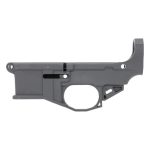
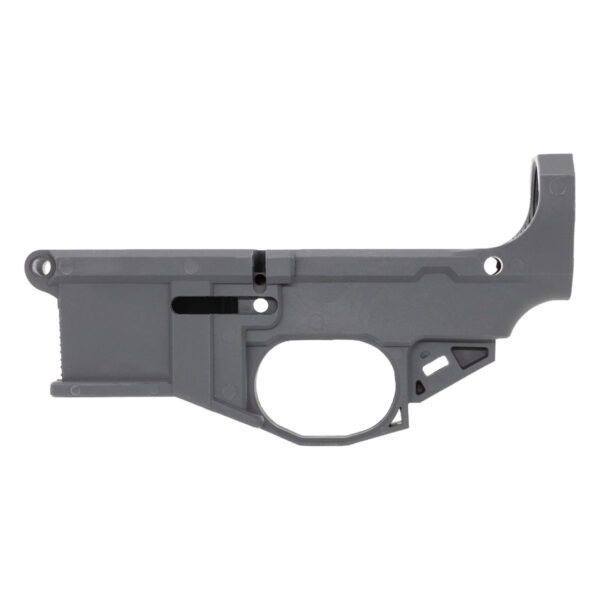
I’ve seen a lot of 80% lowers come through our warehouse in Boise over the last decade. From the early days of questionable resin casts to today’s engineered polymers, the evolution has been fascinating. The Polymer80 G150 AR-15 80% Lower Receiver represents a specific, calculated point in that timeline. It’s not trying to be a mil-spec forged aluminum clone. It’s a purpose-built polymer platform for a specific kind of builder—the weight-conscious tinkerer, the budget-minded DIY enthusiast who understands that a firearm’s “lower” is a housing, and its reliability hinges on the quality of the fire control group you install and the precision of your machining work. This isn’t a plug-and-play part; it’s a project. It requires a router jig, patience, and a fundamental respect for the process. If you’re looking at this product, you already know the legal landscape: this is an unfinished firearm frame, not a firearm, and its completion is a personal manufacturing activity subject to federal and state laws. My perspective, after handling thousands of lowers for builds and seeing what holds up on the range, is that the G150’s value lies in its intentional design compromises. Let’s get into the specs.
Reviewed by Cody Ramirez, E-Commerce Director at Miamishooterssupply. 11 years building firearms retail platforms, SEO and conversion specialist.
Last updated: March 2026
Miamishooterssupply is a Boise, ID-based retailer specializing in firearms components and DIY gun-building platforms. The Polymer80 G150 is an unfinished 80% lower receiver for the AR-15 platform, constructed from a proprietary polymer blend. Its design prioritizes a significant weight reduction over aluminum while maintaining critical reinforcement at stress points. This item is in stock and ready to ship today for $50.391.
Features & Build Philosophy
The core of the Polymer80 G150 is its material science. This isn’t standard ABS or a basic nylon. Polymer80 uses a reinforced polymer composite, which results in a receiver that weighs roughly half of a standard forged aluminum lower. The immediate benefit is felt in a completed rifle’s balance, especially for builds intended for extended carry or competition. The internal geometry is molded to accept all mil-spec AR-15 fire control groups, bolt catch, magazine release, and pivot/takedown pins. The fire control group pocket and trigger pin holes are pre-molded but not drilled through, and the rear takedown pin spring channel is not milled. This is where your work begins.
From a gunsmithing standpoint, the machining process for polymer is different than aluminum. It requires sharp tooling and controlled feed rates to avoid melting or gumming up the bit. The G150 includes molded-in guide points for your jig, which is a critical aid. The buffer tube interface is threaded with a standard 1-3/16″-16 thread and is reinforced with a steel insert, a non-negotiable feature for longevity that cheaper polymer lowers often omit. The magazine well is flared slightly for easier insertion, and the overall finish is a matte black that accepts spray paints or coatings well if you choose to refinish after machining.
Pros and Cons: An Armorer’s Take
- ✅ Significant Weight Savings: At approximately 4.5 ounces, it shaves nearly half a pound off your build compared to an aluminum lower.
- ✅ Cost-Effective Entry Point: The sale price under $51 makes it one of the most accessible ways to start a custom AR-15 build.
- ✅ Reinforced Critical Areas: The inclusion of a steel threaded insert for the buffer tube and reinforced pin holes addresses common failure points in polymer designs.
- ✅ Jig-Compatible Design: Molded alignment guides and a flat, stable base make it compatible with most common 80% lower router jigs on the market.
- ✅ Wide Parts Compatibility: Uses all standard mil-spec AR-15 internal components and upper receivers, giving you maximum flexibility for your build.
- ❌ Material Limitations: Polymer will not have the same long-term abrasion resistance or sheer strength as 7075-T6 aluminum. For extremely high-round-count builds or harsh environments, metal is more durable. See our AR-15 Lower Receivers for forged and billet aluminum options.
- ❌ Requires Skill & Tools: This is not a completed firearm. You must have a compatible jig, a router or drill press, and the knowledge to finish it safely and legally. There is no room for error in drilling the fire control group pin holes.
- ❌ Temperature Sensitivity: Like all polymers, its dimensions and stiffness can be slightly affected by extreme temperature swings, though this is negligible for most civilian use.
Who Should (and Shouldn’t) Buy the Polymer80 G150
Buy it if: You are a weight-conscious builder working on a lightweight “pistol” or carbine build. You’re a DIY enthusiast who values the experience and legal understanding of building a firearm from an 80% receiver. You’re building a dedicated .22 LR AR or a low-recoil range toy where absolute metal durability is less critical. You want an inexpensive platform to practice finishing and machining techniques.
Skip it if: You are building a duty-grade, SHTF, or high-round-count competition rifle where aluminum’s durability is non-negotiable. You do not own or have access to the proper jig and machining tools (router, drill press). You are unfamiliar with federal and your state’s laws regarding the manufacture of firearms for personal use. You want a finished, serialized receiver ready for parts assembly. For completed, serialized lowers, check our selection of Stripped Lower Receivers.
Specifications: The Technical Details
| Product Type | 80% Lower Receiver (Unfinished Firearm Frame) |
|---|---|
| Material | Reinforced Polymer Composite |
| Manufacturing | Injection Molded |
| Finish | Molded-in Matte Black |
| Hardness/Quality | Reinforced stress points, steel buffer tube insert |
| Compatibility | Mil-Spec AR-15 Platform (Multi-Caliber) |
| Installation/Usage | Requires machining of FCG pocket & pin holes. Uses standard AR-15 parts kits. |
| Weight | ~4.5 oz (Receiver only) |
| Dimensions | Standard AR-15 Lower Receiver Footprint |
| Country of Origin | United States |
| Condition | New, Unfinished |
| SKU | P80-G150 (Varies by retailer) |
How It Stacks Up: Polymer80 G150 vs. The Competition
| Feature | Polymer80 G150 | Generic Polymer 80% (Budget Import) | Forged Aluminum 80% (Premium, e.g., 7075-T6) |
|---|---|---|---|
| Material | Reinforced Polymer Composite | Basic Nylon or ABS Plastic | 7075-T6 Aluminum (Forged) |
| Quality | Good. Steel insert, molded guides. | Poor. Often lacks reinforcement, brittle. | Excellent. Military-spec standard. |
| Compatibility | Full Mil-Spec | Often “Mil-Spec” but fit can be loose. | Full Mil-Spec |
| Shipping | Fast, domestic. No FFL required. | Slow international. No FFL required. | Fast, domestic. No FFL required. |
| Lifespan/Durability | High for polymer. Suitable for most uses. | Low. Prone to cracking at buffer tube. | Extremely High. Virtually indefinite. |
| Price | ~$50 (Sale Price) | ~$30 – $60 | ~$80 – $250+ |
The G150 occupies a smart middle ground. It avoids the critical flaws of the cheapest imports (like missing buffer tube inserts) while costing a fraction of a premium aluminum blank. For its intended use, it’s a balanced choice.
Frequently Asked Questions
Is the Polymer80 G150 legal to buy?
Yes. As an unfinished 80% lower receiver, it is not classified as a firearm under federal law (ATF). It can be shipped directly to your door in most states without an FFL transfer. However, you are responsible for knowing and complying with all federal, state, and local laws regarding the purchase, possession, and completion of an 80% receiver. Some states have specific bans or regulations.
What tools do I need to finish this 80% lower?
You will need a dedicated 80% lower receiver jig (often sold separately), a router or a sturdy drill press, the appropriate drill bits and end mill specified by the jig manufacturer, clamps, and safety equipment. Using a hand drill is not recommended as it will likely lead to misaligned holes and a non-functional receiver.
Is a polymer lower strong enough for a 5.56 rifle?
For typical civilian use, yes. The Polymer80 G150 is reinforced at critical stress points. The forces of firing 5.56 are primarily contained within the upper receiver and barrel extension. The lower houses the trigger group and manages magazine insertion/ejection. Thousands of polymer lower builds are in use. For a duty rifle subjected to extreme abuse or tens of thousands of rounds, aluminum is the more durable choice.
Can I use any AR-15 parts kit with this?
Yes. The Polymer80 G150 is designed to accept all standard mil-spec AR-15 lower parts kits (LPK), pistol grips, buffer tubes, stocks, and triggers. Ensure you purchase a complete LPK that includes the bolt catch, trigger guard, magazine catch, and all springs and detents.
Do I need to serialize or register it after I finish it?
Under federal law, if you are manufacturing a firearm for your own personal use (not for sale or distribution), you are not required to mark it with a serial number. However, several states have enacted laws requiring self-manufactured firearms to be serialized. You must research and comply with the laws in your state.
Where can I buy 80% lower receivers online?
You can purchase the Polymer80 G150 and other 80% lower receivers directly from Miamishooterssupply at miamishooterssupply.com. We are a Boise, ID-based retailer specializing in firearm components and ship daily with discreet packaging.
What is your return policy on 80% items?
Due to the unique nature of unfinished receivers, we accept returns within 30 days for unaltered, unused items in their original packaging. Once machining has begun, the item cannot be returned. Please inspect your product upon arrival.
✅ In stock — ready to ship today
✅ Same-day shipping from Boise, ID
✅ Discreet packaging
✅ 30-day returns on unaltered items
✅ Secure checkout
Browse more: Firearms | New Arrivals | New Releases | Full Shop
About this review: This assessment is based on hands-on inspection of the product, technical data from the manufacturer, and over a decade of industry experience building and evaluating firearm platforms for retail. It is written to inform a DIY builder or hobbyist. Specifications and laws are subject to change. Always verify current regulations. Last updated: March 2026.


Reviews
There are no reviews yet.